
Injuries to bones and joints are common, especially during daily activities, sports, or accidental falls. One of the biggest challenges people face after an injury is identifying whether they have suffered a bone fracture or a sprain. Since both conditions share similar symptoms, fractures are often mistaken for sprains, leading to delayed diagnosis and improper treatment.
Ignoring fracture symptoms can result in long-term complications such as improper bone healing, chronic pain, and reduced mobility. Understanding the difference between the two is crucial, particularly when seeking timely care from an Orthopaedic Hospital in Chandigarh.
This blog explains the five most common bone fracture symptoms that are often confused with sprains, helping you make informed decisions about your bone health.
Understanding the Difference Between a Fracture and a Sprain
Understanding the difference between a fracture and a sprain is essential for timely and effective treatment. A sprain occurs when ligaments—the strong tissues connecting bones at a joint—are stretched or torn due to sudden twisting or impact. Sprains usually cause pain, swelling, and limited movement but often heal with rest, immobilisation, and basic care. In contrast, a fracture involves a crack or complete break in the bone itself and typically requires more structured orthopaedic care.
The challenge arises because early fracture symptoms may not always appear severe. Mild fractures can initially feel similar to sprains, causing people to underestimate the injury. Pain may be tolerable, swelling may seem manageable, and movement might still be possible. This leads many individuals to delay seeking professional help from an Orthopaedic Hospital in Chandigarh, assuming the injury will heal on its own. However, untreated fractures can worsen over time. Visiting an Orthopaedic Hospital in Chandigarh allows proper assessment, imaging, and guidance to avoid complications. Early diagnosis at an Orthopaedic Hospital in Chandigarh ensures the right treatment approach and faster recovery.

Why Early Identification of Fractures Matters
When fractures are mistaken for sprains, individuals may continue using the injured area, worsening the damage. Early diagnosis ensures proper alignment, faster healing, and reduced risk of complications.
Orthopaedic experts emphasize that timely evaluation at an Orthopaedic Hospital in Chandigarh helps prevent long-term joint stiffness, deformity, and mobility loss.
1. Persistent Pain That Doesn’t Improve
Pain is a common symptom in both sprains and fractures. However, one key difference is how long the pain lasts.
How It Feels
- Sprain pain usually reduces gradually with rest.
- Fracture pain tends to remain constant or worsen over time.
If pain persists for several days without improvement, it may indicate a fracture rather than a ligament injury. Persistent pain should never be ignored, especially when consulting an Orthopaedic Hospital in Chandigarh could provide early clarity.
2. Swelling That Continues or Increases
Swelling is another symptom that overlaps between sprains and fractures, making diagnosis tricky.
Key Differences
- Sprain-related swelling typically reduces with ice and elevation.
- Fracture swelling often continues or increases due to internal bleeding.
Swelling that spreads beyond the injury site or remains firm and tender may signal a bone fracture. Orthopaedic evaluation helps determine the underlying cause and prevent complications.
3. Difficulty Bearing Weight or Using the Limb
After a minor sprain, most people can still use the affected joint with some discomfort. However, fractures significantly impact function.
Warning Signs
- Inability to stand, walk, or grip objects
- Severe discomfort when trying to move the limb
- Loss of strength or stability
If normal movement becomes impossible, it is a strong indication of a fracture. Seeking care from an Orthopaedic Hospital in Chandigarh ensures accurate diagnosis and appropriate management.
4. Bruising That Appears Quickly or Spreads Widely
Bruising is common in soft tissue injuries, but fractures often cause deep bruising due to damaged blood vessels within the bone.
What to Watch For
- Rapid bruising within hours of injury
- Bruising spreading far from the injury site
- Skin discoloration lasting longer than expected
These signs suggest internal trauma that goes beyond a simple sprain. Orthopaedic specialists assess bruising patterns to differentiate between ligament injuries and fractures.
5. Visible Deformity or Abnormal Positioning
Not all fractures cause obvious deformities, but when they do, they are often mistaken for swelling caused by a sprain.
Possible Indicators
- Bent or misaligned limb
- Uneven joint appearance
- Shortening of the affected area
Even subtle deformities should be taken seriously. Prompt evaluation at an Orthopaedic Hospital in Chandigarh helps restore proper alignment and prevent permanent damage.
Common Areas Where Fractures Are Mistaken for Sprains
Certain body parts are more prone to misdiagnosis due to frequent sprains:
- Ankles – fractures often confused with ankle sprains
- Wrists – small fractures mistaken for ligament strain
- Knees – hairline fractures misread as soft tissue injury
- Fingers and toes – minor fractures overlooked
In such cases, professional orthopaedic assessment plays a critical role in identifying the true cause of pain.
Why Fractures Are Often Underestimated
Several factors contribute to people ignoring fracture symptoms:
- High pain tolerance
- Temporary relief with painkillers
- Assumption that rest alone will heal the injury
- Lack of visible wounds
Unfortunately, untreated fractures can heal improperly, leading to chronic pain and reduced joint function. Consulting an Orthopaedic Hospital in Chandigarh ensures injuries are treated correctly from the start.
How Orthopaedic Evaluation Helps
Orthopaedic specialists use clinical assessment and imaging techniques to identify fractures accurately. Early diagnosis allows for:
- Proper immobilization
- Faster healing
- Reduced risk of complications
- Improved long-term mobility
A timely visit to an Orthopaedic Hospital in Chandigarh ensures injuries are not mismanaged as simple sprains.
Healing Time: Fracture vs Sprain
| Injury Type | Typical Healing Time |
| Mild Sprain | 1–3 weeks |
| Severe Sprain | 4–8 weeks |
| Fracture | 6–12 weeks or more |
Mistaking a fracture for a sprain can significantly delay recovery and worsen outcomes.
When to Seek Immediate Orthopaedic Care
You should seek immediate orthopaedic attention if you experience:
- Severe or increasing pain
- Inability to move or bear weight
- Rapid swelling or bruising
- Visible deformity
- Pain lasting more than 48 hours
Early intervention at an Orthopaedic Hospital in Chandigarh reduces healing time and prevents long-term issues.
Preventing Misdiagnosis of Bone Injuries
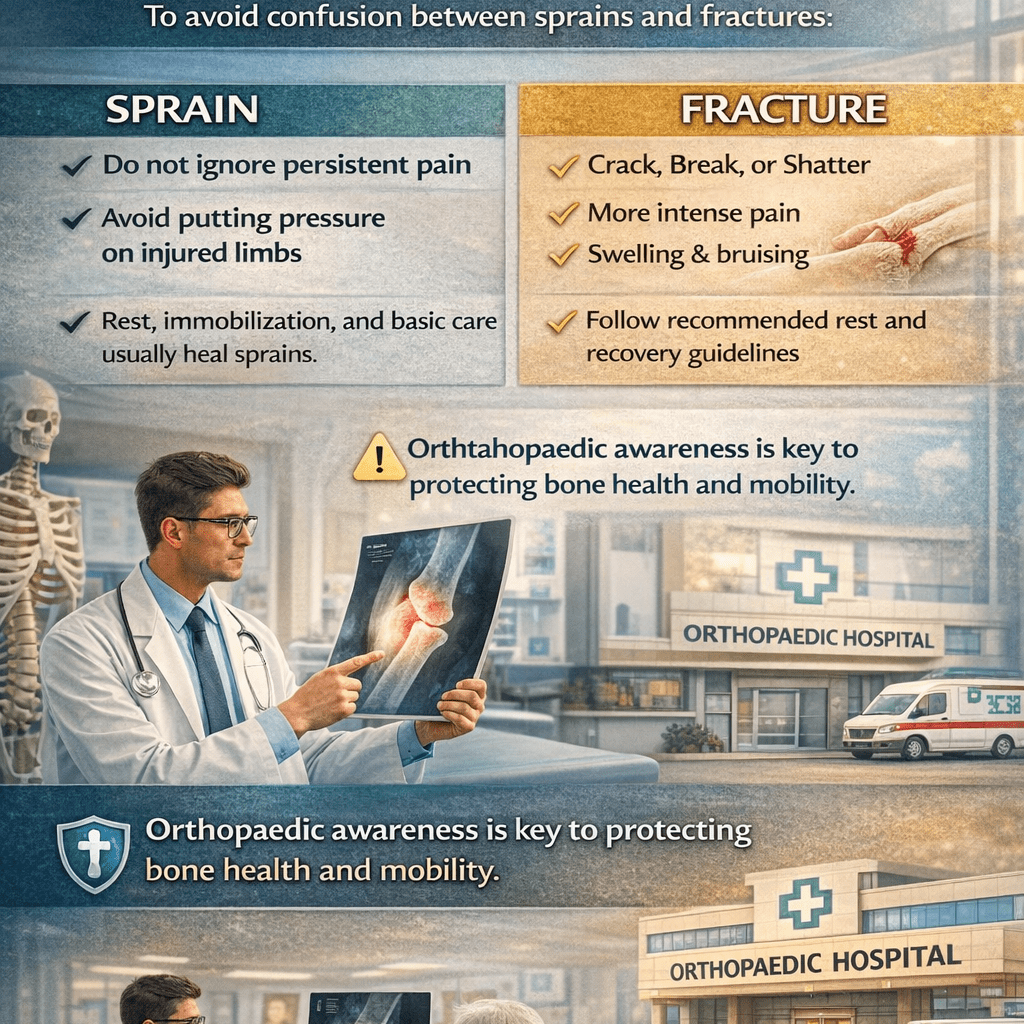
To avoid confusion between sprains and fractures:
- Do not ignore persistent pain
- Avoid putting pressure on injured limbs
- Seek professional evaluation instead of self-diagnosis
- Follow recommended rest and recovery guidelines
Orthopaedic awareness is key to protecting bone health and mobility.
Conclusion
Bone fractures and sprains often share similar symptoms, making them difficult to distinguish without professional evaluation. Persistent pain, increasing swelling, difficulty in movement, widespread bruising, and visible deformity are critical signs that should never be ignored. When these symptoms are overlooked, people often continue normal activities, which can worsen bone damage.
Misinterpreting fracture symptoms as sprains can lead to delayed healing, chronic pain, joint stiffness, and long-term mobility issues. Seeking timely assessment from an Orthopaedic Hospital in Chandigarh ensures accurate diagnosis, proper treatment, and a smoother recovery process. Specialists at an Orthopaedic Hospital in Chandigarh focus on restoring bone alignment, function, and strength.Being informed and proactive about bone injuries plays a key role in protecting long-term musculoskeletal health. Prompt consultation with an Orthopaedic Hospital in Chandigarh helps prevent avoidable complications and supports safe, effective healing, allowing individuals to return to daily activities with confidence.