
When people think about summer, the first health concern that usually comes to mind is heatstroke. While heatstroke is indeed serious, it is not the only issue to worry about. There are several other summer health risks that often go unnoticed but can affect your overall well-being.
From dehydration to infections and skin problems, summer brings a variety of hidden challenges. Understanding these summer health risks can help you stay safe, healthy, and prepared during the hotter months.
Why Summer Increases Health Risks
Summer creates environmental conditions that can significantly affect the human body. High temperatures, increased humidity, and prolonged exposure to sunlight put extra stress on the body’s natural balance. These factors directly contribute to rising summer health risks, making it important to understand how they impact daily health.
One of the main reasons for increased summer health risks is excessive sweating. As the body tries to cool itself, it loses a large amount of water and essential minerals. This can lead to dehydration, fatigue, and weakness. If hydration is not maintained, these summer health risks can become more serious and affect overall body function.
Another important factor is the rapid growth of bacteria and viruses in warm environments. Food spoils faster, water sources may become contaminated, and hygiene challenges increase. This raises the chances of infections, making summer health risks more common during this season. Digestive problems, skin infections, and viral illnesses are often linked to these conditions.
Sun exposure is also a major contributor to summer health risks. Long hours under direct sunlight can lead to skin damage, sunburn, and heat-related illnesses. In addition, high temperatures can reduce energy levels and affect concentration, adding to the overall impact of summer health risks.
These combined factors make summer a challenging season for maintaining good health. Understanding the causes of summer health risks helps individuals take preventive measures and stay safe.
Dehydration: A Silent Threat
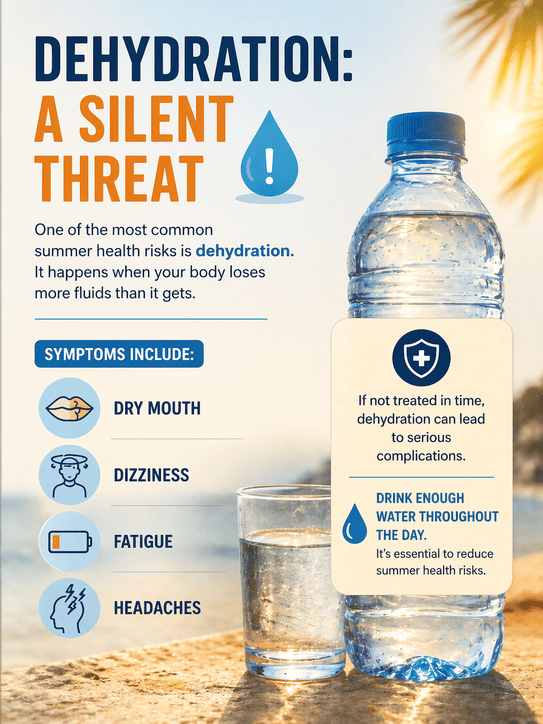
One of the most common summer health risks is dehydration. It happens when your body loses more fluids than it gets.
Symptoms include:
- Dry mouth
- Dizziness
- Fatigue
- Headaches
If not treated in time, dehydration can lead to serious complications. Drinking enough water throughout the day is essential to reduce summer health risks.
Heat Exhaustion and Heatstroke
While heatstroke is widely known, many people ignore the early stage called heat exhaustion.
Heat exhaustion symptoms include:
- Heavy sweating
- Weakness
- Nausea
- Rapid heartbeat
If not addressed, it can lead to heatstroke, which is a severe condition. Recognizing these signs early helps manage summer health risks effectively.
Food Poisoning and Digestive Issues
Summer is a time when food poisoning is most common. High temperatures can cause food to spoil quickly, leading to bacterial growth.
Common issues include:
- Food poisoning
- Stomach infections
- Diarrhea
Maintaining proper hygiene and eating fresh food can reduce these summer health risks.
Skin Problems and Sun Damage
Prolonged exposure to sunlight can cause various skin issues.
These include:
- Sunburn
- Rashes
- Allergies
Ultraviolet (UV) rays can damage the skin and increase the risk of long-term problems. Protecting your skin is an important step in preventing summer health risks.
Eye Infections and Irritation
Summer can also affect eye health. Dust, pollution, and increased exposure to sunlight can lead to eye irritation and infections.
Symptoms include:
- Redness
- Itching
- Watery eyes
Proper eye care helps reduce these summer health risks.
Respiratory Problems
Hot weather combined with pollution can worsen respiratory conditions such as asthma and allergies.
People may experience:
- Difficulty breathing
- Coughing
- Chest discomfort
Taking precautions can help manage these summer health risks.
Increased Risk of Infections
Warm and humid conditions create an ideal environment for bacteria and viruses to grow.
Common infections during summer include:
- Viral infections
- Fungal infections
- Waterborne diseases
Maintaining hygiene is essential to avoid these summer health risks.
Fatigue and Low Energy Levels
Extreme heat can drain your energy and make you feel tired throughout the day.
This can affect:
- Productivity
- Concentration
- Overall health
Managing hydration and rest can help reduce these summer health risks.
Tips to Prevent Summer Health Risks
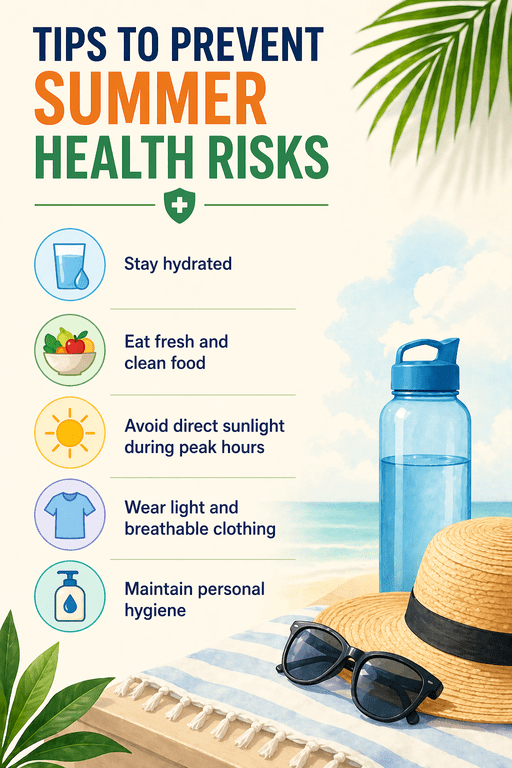
Preventing health issues during summer requires simple but effective steps:
- Stay hydrated
- Eat fresh and clean food
- Avoid direct sunlight during peak hours
- Wear light and breathable clothing
- Maintain personal hygiene
These habits can significantly reduce summer health risks.
Importance of Awareness
Awareness plays a crucial role in managing and preventing summer health risks. Many people focus only on heatstroke and ignore other hidden issues such as dehydration, infections, and fatigue. However, being aware of all possible summer health risks allows individuals to take early action and avoid complications.
When people understand summer health risks, they are more likely to adopt healthy habits such as drinking enough water, maintaining hygiene, and avoiding excessive sun exposure. Awareness helps in recognizing early symptoms, which is essential for timely treatment and prevention of serious conditions.
Another key benefit of awareness is better decision-making. When individuals are informed about summer health risks, they can take the right steps to protect themselves and their families. This includes choosing safe food, staying in cool environments, and following proper health practices.
Awareness also reduces panic during health issues. When people know how to handle common summer health risks, they can respond calmly and effectively. This improves overall health outcomes and reduces the chances of complications.
In conclusion, understanding and spreading awareness about summer health risks is essential for maintaining good health during the hot season. By staying informed and taking simple precautions, individuals can protect themselves and enjoy a safer and healthier summer.
When to Seek Medical Help
If symptoms become severe or do not improve, it is important to seek medical attention.
Warning signs include:
- Persistent vomiting
- High fever
- Severe dehydration
- Difficulty breathing
Ignoring these signs can increase summer health risks.
Final Thoughts
Summer is often associated with sunshine and outdoor activities, but it also brings a range of hidden challenges that should not be ignored. From dehydration and infections to skin and respiratory problems, summer health risks can affect anyone if proper precautions are not taken. These summer health risks may start as minor issues but can quickly become serious if overlooked.
Understanding summer health risks is the first and most important step toward prevention. When people are aware of these risks, they are more likely to take proactive measures such as staying hydrated, eating fresh food, and maintaining proper hygiene. Simple habits like avoiding direct sunlight during peak hours and wearing comfortable clothing can also help reduce summer health risks.
Another key aspect is consistency. Managing summer health risks is not about one-time actions but about following healthy practices every day. Regular hydration, balanced nutrition, and proper rest play a crucial role in keeping the body strong during extreme weather conditions.
In addition, early recognition of symptoms can make a big difference. Identifying signs of dehydration, fatigue, or infections allows for quick action, preventing complications related to summer health risks.In the end, staying aware and taking simple precautions can help you enjoy the summer season without compromising your health. By understanding and managing summer health risks, you can protect yourself and your loved ones while maintaining overall well-being.