
Seasonal changes often bring noticeable shifts in weather, temperature, humidity, and air quality. While these changes may seem normal, they can significantly affect children’s health. Many parents observe that children become sick more frequently during transitions between seasons, especially when moving from summer to monsoon or winter to spring. Understanding viral infections in children is important because young immune systems are more sensitive to environmental changes and infections spread quickly among children.
Seasonal changes create conditions that allow viruses to survive and spread more easily. At the same time, children’s bodies may struggle to adjust quickly to fluctuating temperatures and changing routines. Schools, playgrounds, crowded indoor spaces, and poor hygiene habits also increase exposure to viruses during these periods.
Although seasonal viral infections are common, proper awareness and preventive care can reduce health risks significantly. Healthy habits, strong immunity, and early attention to symptoms help children recover faster and stay healthier throughout seasonal transitions.
Why Seasonal Changes Affect Children More
Children’s immune systems are still developing, making them more vulnerable to infections compared to adults. Their bodies may take longer to adapt to sudden environmental changes.
Several factors increase the risk of illness during seasonal transitions, including:
- Temperature fluctuations
- Increased humidity
- Dust and pollution exposure
- Reduced immunity
- Crowded indoor environments
- Poor hydration and nutrition
Children also frequently touch shared surfaces, toys, and school materials, which increases the spread of viruses.
This is why viral infections in children become more common during changing weather conditions.
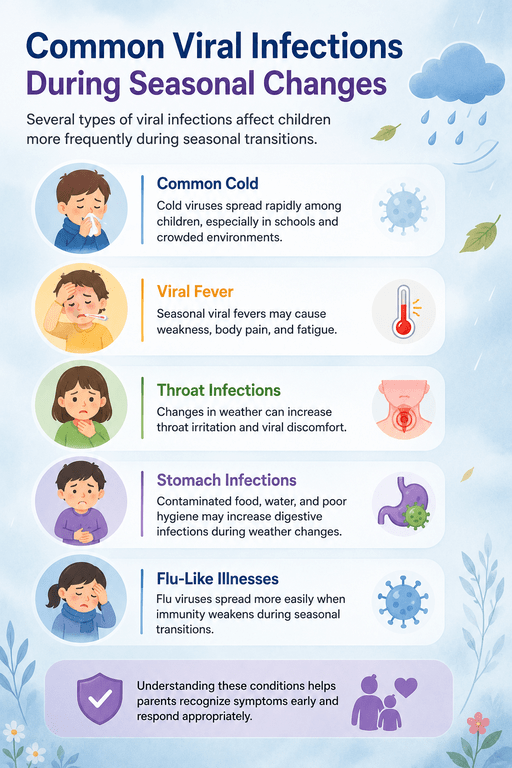
Common Viral Infections During Seasonal Changes
Several types of viral infections affect children more frequently during seasonal transitions.
Common Cold
Cold viruses spread rapidly among children, especially in schools and crowded environments.
Viral Fever
Seasonal viral fevers may cause weakness, body pain, and fatigue.
Throat Infections
Changes in weather can increase throat irritation and viral discomfort.
Stomach Infections
Contaminated food, water, and poor hygiene may increase digestive infections during weather changes.
Flu-Like Illnesses
Flu viruses spread more easily when immunity weakens during seasonal transitions.
Understanding these conditions helps parents recognize symptoms early and respond appropriately.
How Temperature Changes Affect Immunity
Sudden changes in weather can stress the body. Children who move frequently between hot outdoor environments and cool indoor spaces may experience physical strain.
Rapid temperature shifts may affect:
- Respiratory comfort
- Sleep quality
- Hydration levels
- Immune response
When immunity weakens, viruses may spread more easily and symptoms may become more noticeable.
Balanced routines help children adjust better during seasonal weather changes.
Why Schools Increase Infection Spread
Schools and daycare environments are major sources of viral transmission because children remain in close contact for long hours.
Viruses spread through:
- Sneezing
- Coughing
- Shared surfaces
- Physical contact
- Poor hand hygiene
Young children often forget proper hygiene practices, increasing the chances of infections spreading quickly.
Parents should encourage healthy hygiene habits both at home and in school routines.
The Role of Poor Hygiene Habits
Children naturally explore their surroundings through touch and play. However, poor hygiene habits increase exposure to viruses.
Common habits that spread infections include:
- Touching the face frequently
- Sharing food or water bottles
- Not washing hands properly
- Covering coughs incorrectly
Simple hygiene awareness can reduce infection risks significantly.
Teaching children proper handwashing remains one of the most effective child immunity tips during seasonal changes.
How Poor Sleep Affects Children’s Immunity
Sleep plays a major role in strengthening the immune system. During seasonal changes, children may experience irregular sleep due to changing weather, school schedules, or discomfort.
Poor sleep may lead to:
- Weak immunity
- Fatigue
- Irritability
- Reduced energy levels
Children who do not get proper rest may become more vulnerable to viral infections.
Healthy sleep routines support stronger immunity and faster recovery.
The Connection Between Nutrition and Viral Infections
Nutrition directly affects immune health. Poor eating habits may weaken the body’s ability to fight infections.
Children need balanced meals containing:
- Fruits
- Vegetables
- Protein-rich foods
- Healthy fluids
- Nutrient-rich snacks
Seasonal fruits and fresh homemade foods help improve immunity naturally.
Excessive junk food, sugary drinks, and processed snacks may weaken resistance to infections.
Healthy eating is one of the best seasonal health care for children strategies.
Importance of Hydration During Seasonal Changes
Hydration is essential for maintaining overall health and immunity. Weather changes may affect hydration habits, especially when children are busy with school or outdoor activities.
Poor hydration may cause:
- Fatigue
- Dry throat
- Reduced immunity
- Weakness
Encouraging regular water intake supports better physical health and helps the body recover more effectively from infections.
Water-rich foods and healthy fluids also support hydration naturally.
Air Quality and Respiratory Infections
Seasonal transitions often increase dust, pollution, pollen, and humidity levels. These environmental changes may irritate the respiratory system.
Children may experience:
- Sneezing
- Coughing
- Nasal congestion
- Breathing discomfort
Poor air quality can weaken respiratory health and make viral infections more uncomfortable.
Keeping indoor spaces clean and ventilated helps reduce exposure to airborne irritants.
Why Children Recover Differently from Adults
Children may become infected more quickly, but they also often recover faster with proper care and nutrition.
Ignoring symptoms may lead to more complications or a longer recovery.
Parents should monitor symptoms such as:
- High fever
- Persistent cough
- Difficulty breathing
- Extreme weakness
- Poor appetite
Early observation and supportive care help children recover safely.
Healthy Habits That Help Prevent Viral Infections
Several daily habits help strengthen immunity and reduce infection risks during seasonal changes.
Proper Handwashing
Children should wash hands before eating and after outdoor activities.
Balanced Nutrition
Healthy meals improve immune strength naturally.
Adequate Sleep
Proper rest supports immune system recovery.
Physical Activity
Regular movement improves circulation and overall wellness.
Hydration
Water supports body functions and immune health.
Clean Indoor Spaces
Maintaining hygiene reduces virus spread at home.
These habits create stronger protection against seasonal illnesses.
Why Emotional Health Also Matters
Stress and emotional discomfort may also affect immunity. Children who feel anxious, tired, or emotionally stressed may become more vulnerable to illness.
Supportive family routines, healthy sleep, and positive environments improve emotional well-being and physical resilience.
Parents should pay attention to behavioral changes during seasonal transitions, especially if children appear unusually tired or irritable.
Seasonal Clothing and Protection
Wearing appropriate clothing during changing weather helps protect children from sudden temperature shifts.
Helpful practices include:
- Dressing in breathable layers
- Avoiding damp clothing
- Keeping children dry during rainy weather
- Protecting against excessive cold or heat exposure
Comfortable clothing supports better body temperature regulation during seasonal transitions.
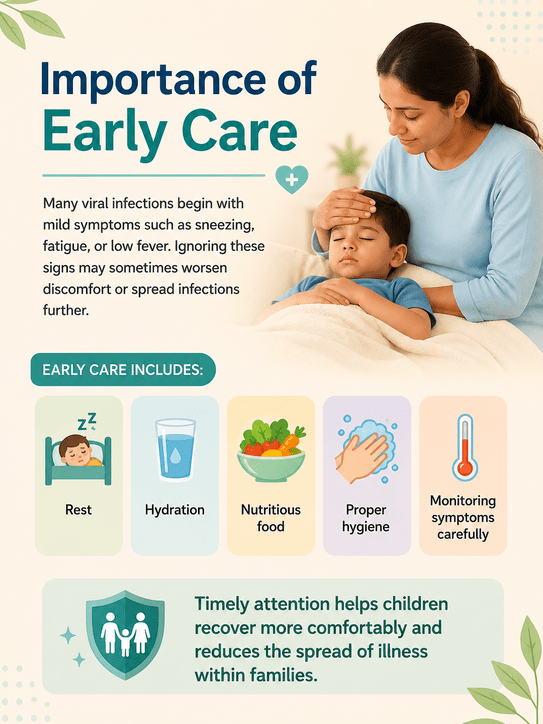
Importance of Early Care
Many viral infections begin with mild symptoms such as sneezing, fatigue, or low fever. Ignoring these signs may sometimes worsen discomfort or spread infections further.
Early care includes:
- Rest
- Hydration
- Nutritious food
- Proper hygiene
- Monitoring symptoms carefully
Timely attention helps children recover more comfortably and reduces the spread of illness within families.
Conclusion
Understanding viral infections in children is essential because seasonal changes create conditions that increase infection risks among young children. Temperature fluctuations, poor hygiene, weak immunity, crowded environments, and unhealthy routines all contribute to the spread of viral illnesses during changing weather.
Parents can reduce risks by encouraging healthy habits such as proper handwashing, balanced nutrition, adequate sleep, hydration, and regular hygiene practices. Early attention to symptoms and supportive care also help children recover faster and remain healthier throughout seasonal transitions.
Seasonal viral infections may be common, but they should never be ignored. Strong immunity, healthy daily routines, and preventive care play a major role in protecting children and supporting long-term wellness.