
Aging brings many life changes, including retirement, reduced physical activity, health challenges, and changes in family dynamics. While these transitions are natural, they can sometimes increase feelings of loneliness among older adults. Many people underestimate how deeply loneliness can affect physical and emotional well-being. Understanding elderly mental health is important because emotional isolation can quietly influence overall health, daily routines, and quality of life in seniors.
Loneliness is not simply about being alone. An elderly person may live with family members and still feel emotionally disconnected or unsupported. Over time, social isolation and emotional stress may affect sleep, energy levels, immunity, appetite, memory, and even heart health. Seniors who feel lonely often lose motivation to stay active, maintain healthy habits, or participate in social activities.
By recognizing the emotional needs of older adults and creating supportive environments, families can help improve both emotional wellness and long-term health in elderly individuals.
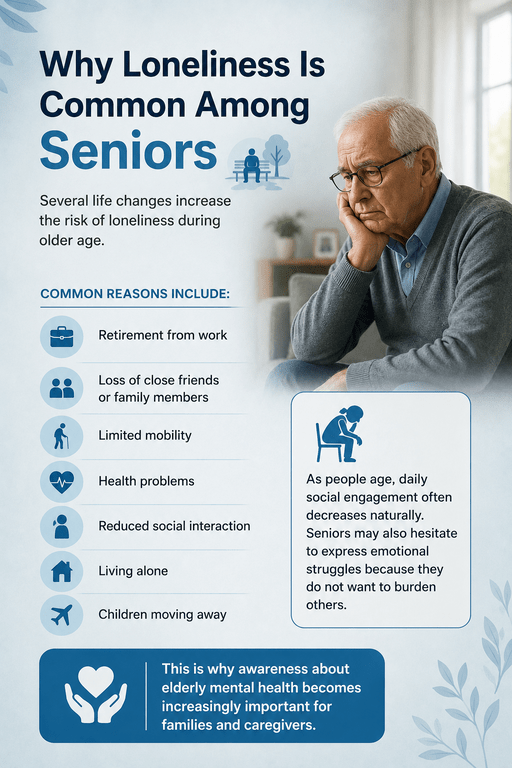
Why Loneliness Is Common Among Seniors
Several life changes increase the risk of loneliness during older age.
Common reasons include:
- Retirement from work
- Loss of close friends or family members
- Limited mobility
- Health problems
- Reduced social interaction
- Living alone
- Children moving away
As people age, daily social engagement often decreases naturally. Seniors may also hesitate to express emotional struggles because they do not want to burden others.
This is why awareness about elderly mental health becomes increasingly important for families and caregivers.
How Loneliness Affects Physical Health
Loneliness does not only affect emotions. It may also create physical health challenges over time.
Seniors experiencing emotional isolation may face:
- Fatigue
- Poor sleep quality
- Reduced appetite
- Low energy
- Weak immunity
- Increased stress levels
Chronic emotional stress can place pressure on the body and make it harder for seniors to maintain healthy routines.
Mental well-being and physical wellness are closely connected, especially during older age.
The Connection Between Loneliness and Depression
Long-term loneliness may increase the risk of depression in elderly individuals.
Warning signs may include:
- Persistent sadness
- Loss of interest in activities
- Irritability
- Emotional withdrawal
- Lack of motivation
- Reduced communication
Depression in seniors is sometimes misunderstood as a normal part of aging, but emotional distress should never be ignored.
Providing emotional support and regular social interaction helps improve overall emotional wellness in seniors.
Sleep Problems Linked to Emotional Isolation
Seniors who feel lonely may experience difficulty sleeping properly. Emotional stress often affects relaxation and nighttime comfort.
Poor sleep may lead to:
- Daytime fatigue
- Reduced concentration
- Mood changes
- Weak immunity
Lack of proper rest can further increase emotional discomfort and physical weakness.
Healthy routines, social support, and emotional engagement often improve sleep quality naturally.
Reduced Physical Activity and Health Decline
Loneliness sometimes reduces motivation for movement and daily activity. Seniors who feel isolated may spend long hours sitting indoors with minimal physical engagement.
Low activity levels may contribute to:
- Muscle weakness
- Joint stiffness
- Reduced stamina
- Poor circulation
- Increased fatigue
Physical activity supports both emotional balance and physical health.
Even light movement such as walking, stretching, or gardening can improve mood and energy levels.
How Loneliness Affects Memory and Cognitive Health
Social interaction helps keep the mind active and emotionally engaged. Seniors who experience prolonged isolation may notice changes in concentration and memory.
Mental inactivity may contribute to:
- Forgetfulness
- Reduced focus
- Confusion
- Lower emotional engagement
Meaningful conversations, hobbies, reading, and social activities help stimulate the brain and support healthier cognitive function.
Maintaining social connection is an important part of senior emotional care.
Appetite Changes in Lonely Seniors
Emotional health strongly influences eating habits. Seniors who feel lonely may lose interest in meals or skip proper nutrition.
Poor eating habits may cause:
- Weakness
- Weight loss
- Reduced immunity
- Fatigue
Balanced meals are important for maintaining physical strength and emotional well-being.
Families should pay attention to sudden changes in appetite or eating routines among elderly individuals.
The Emotional Impact of Feeling Unneeded
Many seniors struggle emotionally when they feel less involved in family or community activities.
Feelings of being ignored or unnecessary may increase:
- Emotional stress
- Anxiety
- Sadness
- Social withdrawal
Simple gestures such as involving seniors in conversations, family decisions, or activities can improve emotional confidence significantly.
Respect and emotional connection help older adults feel valued and supported.
Importance of Family Support
Families play a major role in protecting elderly mental wellness.
Helpful ways to support seniors include:
- Spending quality time together
- Encouraging conversations
- Listening patiently
- Planning regular family interaction
- Supporting hobbies and interests
Emotional support often improves confidence, mood, and overall health in older adults.
Even small daily interactions can make seniors feel emotionally connected and cared for.
Social Isolation and Chronic Health Conditions
Loneliness may indirectly worsen existing health conditions because emotionally isolated seniors sometimes neglect self-care.
This may affect:
- Medication routines
- Sleep schedules
- Nutrition habits
- Physical activity
Stress and emotional exhaustion may also increase blood pressure and fatigue in some elderly individuals.
Maintaining social engagement encourages healthier routines and improved daily motivation.
Technology and Emotional Connection
Modern technology can help seniors stay connected with family members and friends, especially when physical distance exists.
Video calls, phone conversations, and online interactions may help reduce emotional isolation.
However, personal interaction remains extremely important. Seniors benefit greatly from face-to-face communication and meaningful emotional support.
Balancing technology with real social connection creates healthier emotional environments.
Why Emotional Health Should Never Be Ignored
Many people focus only on physical illnesses in elderly individuals while overlooking emotional struggles.
Signs that may indicate emotional distress include:
- Loss of interest in activities
- Isolation from others
- Mood changes
- Constant tiredness
- Reduced communication
Early attention to emotional health helps prevent more serious mental and physical health concerns.
Mental wellness deserves equal importance alongside physical care.
Healthy Habits That Support Emotional Wellness
Several daily habits help improve emotional health among seniors.
Regular Social Interaction
Meaningful conversations reduce feelings of loneliness.
Physical Activity
Movement improves mood and energy naturally.
Healthy Nutrition
Balanced meals support both mental and physical wellness.
Adequate Sleep
Good sleep improves emotional stability.
Outdoor Exposure
Fresh air and sunlight often improve mood and relaxation.
Mental Engagement
Reading, hobbies, and learning activities help maintain emotional balance.
These habits support healthier aging and emotional comfort.
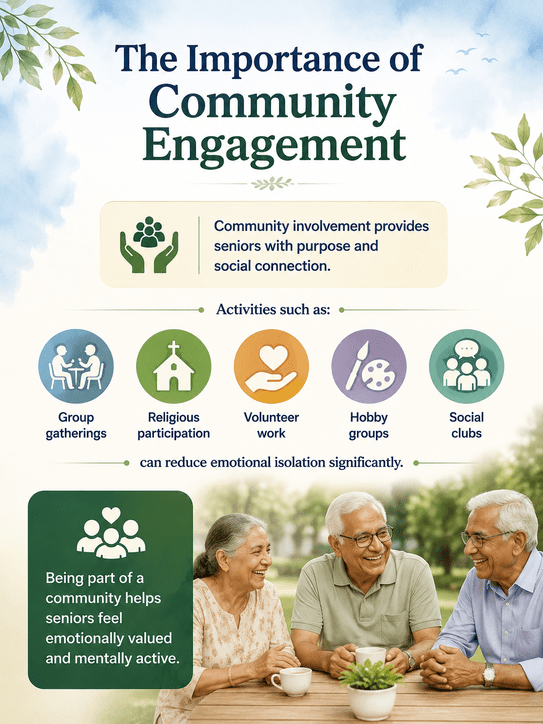
The Importance of Community Engagement
Community involvement provides seniors with purpose and social connection.
Activities such as:
- Group gatherings
- Religious participation
- Volunteer work
- Hobby groups
- Social clubs
can reduce emotional isolation significantly.
Being part of a community helps seniors feel emotionally valued and mentally active.
Building Stronger Emotional Connections With Seniors
Families should encourage open communication and emotional inclusion.
Helpful approaches include:
- Asking about their experiences
- Encouraging storytelling
- Sharing meals together
- Including seniors in celebrations and discussions
Simple emotional support can greatly improve confidence and happiness in elderly individuals.
Conclusion
Understanding elderly mental health is important because loneliness can quietly affect both emotional and physical well-being in older adults. Social isolation may contribute to fatigue, depression, poor sleep, reduced immunity, low energy, and loss of motivation over time.
Seniors need emotional connection, family support, meaningful social interaction, and healthy daily routines to maintain overall wellness. Small efforts such as regular conversations, shared activities, emotional inclusion, and supportive environments can significantly improve emotional health and quality of life.
Loneliness should never be considered a normal part of aging. Early emotional support, healthy social engagement, and compassionate care can help seniors remain happier, healthier, more confident, and emotionally stronger throughout later life.