
Summer is often seen as a joyful season filled with vacations, outdoor games, and school holidays. While children usually enjoy the excitement of summer activities, extreme heat can sometimes affect their physical and emotional well-being more than parents realize. Rising temperatures, dehydration, disrupted sleep, and excessive indoor confinement can all influence a child’s mood, energy, and behavior. Understanding children summer health is important because hot weather can impact both the body and mind of growing children.
Many parents notice that children become more irritable, restless, tired, emotional, or less active during peak summer months. These changes are often linked to heat exposure and unhealthy summer routines rather than simple misbehavior. By understanding how summer heat affects children emotionally and physically, families can create healthier daily habits that support better comfort, mood, and overall wellness.
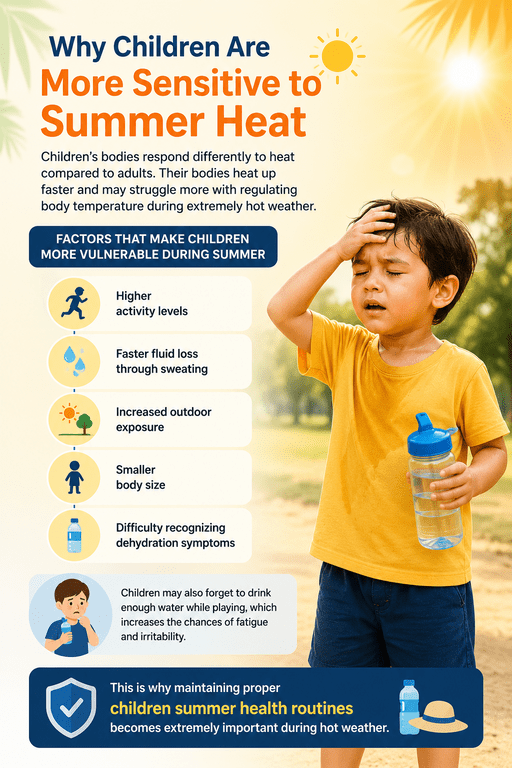
Why Children Are More Sensitive to Summer Heat
Children’s bodies respond differently to heat compared to adults. Their bodies heat up faster, and they may struggle more with regulating body temperature during extremely hot weather.
Several factors make children more vulnerable during summer, including:
- Higher activity levels
- Faster fluid loss through sweating
- Increased outdoor exposure
- Smaller body size
- Difficulty recognizing dehydration symptoms
Children may also forget to drink enough water while playing, which increases the chances of fatigue and irritability.
This is why maintaining proper children summer health routines becomes extremely important during hot weather.
The Connection Between Heat and Mood Changes
Hot weather naturally places stress on the body. When children feel physically uncomfortable due to excessive heat, their mood and emotional behavior may also change.
Many children experience:
- Irritability
- Frustration
- Low patience
- Restlessness
- Mood swings
- Reduced concentration
High temperatures may make children feel exhausted more quickly, especially if they are dehydrated or not sleeping properly.
Children often struggle to explain their discomfort clearly, so emotional changes may become the first noticeable sign that summer heat is affecting them.
Dehydration and Emotional Behavior
Dehydration is one of the biggest reasons children become tired, cranky, or emotionally sensitive during summer.
Even mild dehydration may affect:
- Energy levels
- Focus and concentration
- Emotional balance
- Physical stamina
Children who do not drink enough water may experience headaches, dizziness, tiredness, and reduced interest in activities.
Parents should encourage regular hydration throughout the day, especially during outdoor play or travel.
Proper hydration is one of the most important summer care tips for children because it supports both physical and emotional health.
Sleep Problems During Summer
Summer heat can also affect children’s sleep quality. Warm nights, irregular holiday schedules, and excessive screen exposure may disturb proper rest.
Poor sleep often leads to:
- Irritability
- Hyperactivity
- Difficulty concentrating
- Emotional sensitivity
- Reduced patience
Children who sleep poorly may become more aggressive, emotional, or difficult to manage during the day.
Creating cool and comfortable sleeping environments can improve rest and support healthier moods.
Reduced Outdoor Comfort and Increased Screen Time
Extreme summer temperatures sometimes force children to stay indoors for long periods. While indoor rest is necessary during peak heat, excessive screen exposure may create additional behavioral changes.
Too much screen time may contribute to:
- Restlessness
- Reduced physical activity
- Short attention spans
- Mood fluctuations
- Social withdrawal
Outdoor play is important for emotional development, creativity, and physical wellness. However, during extreme heat, outdoor activities should be planned carefully during cooler parts of the day.
Balancing indoor and outdoor activities supports healthier child behavior during hot weather.
How Heat Affects Physical Energy Levels
Children naturally have high energy levels, but excessive summer heat can quickly drain physical stamina.
Many children experience:
- Weakness
- Fatigue
- Reduced interest in activities
- Increased laziness
- Excessive sweating
The body works harder to stay cool during hot weather, which increases tiredness and lowers energy.
When children feel physically exhausted, emotional frustration may also increase.
Providing enough rest breaks, hydration, and light summer meals can help maintain healthier energy levels.
The Importance of Healthy Summer Nutrition
Diet plays a major role in children’s summer wellness. Heavy, oily, and unhealthy foods may increase sluggishness and discomfort during hot weather.
Healthy summer foods for children include:
- Watermelon
- Cucumber
- Yogurt and curd
- Fresh fruits
- Homemade juices
- Light balanced meals
Nutritious foods support hydration, digestion, and energy while helping children feel more comfortable during summer.
Parents should also reduce excessive sugary drinks and processed snacks whenever possible.
Emotional Effects of Excessive Heat
Children may not always express heat-related discomfort directly. Instead, parents may notice emotional and behavioral changes such as:
- Crying more frequently
- Increased anger or frustration
- Difficulty sitting calmly
- Low motivation
- Sudden mood changes
Heat discomfort can sometimes increase emotional sensitivity, especially in younger children.
Parents who recognize these signs early can respond with hydration, cooling, rest, and supportive care instead of assuming the child is simply misbehaving.
Importance of Structured Summer Routines
Summer holidays often change children’s daily schedules. Irregular sleep patterns, inconsistent meal times, and excessive screen exposure may negatively affect behavior and mood.
Healthy summer routines should include:
- Regular hydration
- Proper sleep schedules
- Balanced meals
- Limited afternoon outdoor exposure
- Physical activity during cooler hours
- Family interaction time
Structured routines help children feel emotionally secure and physically balanced during summer months.
Safe Outdoor Activities for Children
Outdoor play remains important even during summer, but timing matters greatly.
The safest times for outdoor activities are:
- Early morning
- Late evening
Parents should ensure children:
- Wear lightweight cotton clothing
- Stay hydrated
- Take regular breaks
- Avoid direct sunlight for long periods
Safe outdoor play improves physical fitness, emotional wellness, and social interaction without exposing children to excessive heat risks.
Why Parents Should Monitor Summer Behavior Changes
Sometimes behavioral changes may indicate underlying heat-related discomfort or health concerns.
Parents should pay attention if children show:
- Persistent tiredness
- Refusal to eat or drink
- Extreme irritability
- Dizziness
- Excessive sweating
- Difficulty sleeping
Early observation helps prevent dehydration, heat exhaustion, and emotional stress from worsening.
Simple preventive care often improves children’s mood and comfort significantly.
The Role of Family Support During Summer
Children feel more emotionally stable when families maintain supportive and balanced summer routines.
Parents can help by:
- Encouraging hydration regularly
- Limiting excessive screen exposure
- Planning indoor creative activities
- Maintaining healthy meal schedules
- Providing emotional comfort during heat-related irritability
Positive family environments help children cope better with seasonal discomfort.
Summer wellness is not only about physical health but also emotional balance and mental comfort.
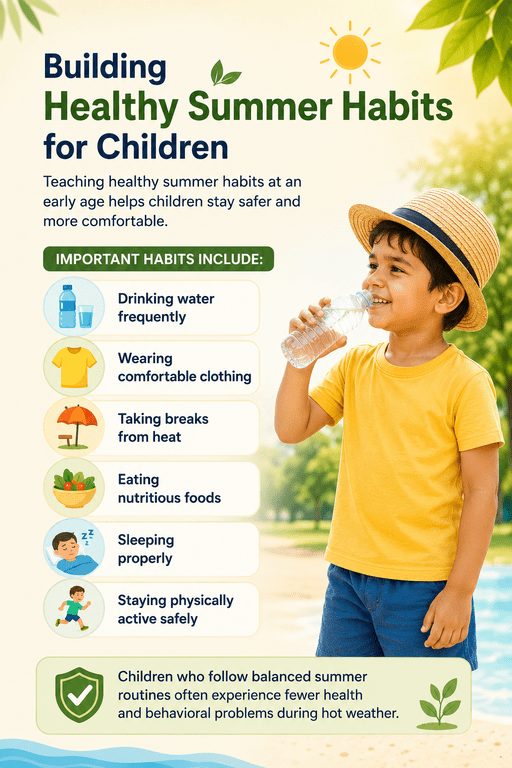
Building Healthy Summer Habits for Children
Teaching healthy summer habits at an early age helps children stay safer and more comfortable.
Important habits include:
- Drinking water frequently
- Wearing comfortable clothing
- Taking breaks from heat
- Eating nutritious foods
- Sleeping properly
- Staying physically active safely
Children who follow balanced summer routines often experience fewer health and behavioral problems during hot weather.
Conclusion
Understanding children summer health is important because extreme summer heat can affect both the physical and emotional well-being of children. High temperatures, dehydration, poor sleep, irregular routines, and excessive indoor confinement may lead to irritability, fatigue, mood swings, and behavioral changes.
Parents play a major role in protecting children through proper hydration, balanced nutrition, structured routines, healthy sleep habits, and safe outdoor activities. Simple daily precautions can significantly improve children’s comfort, emotional stability, and overall wellness during summer months.
Heat-related behavior changes should never be ignored as simple stubbornness or laziness. Early awareness and supportive care help children remain healthier, happier, more active, and emotionally balanced throughout the summer season.