
Air conditioners have become an important part of modern life, especially during extremely hot summer months. Families often depend on air conditioning to stay comfortable and protect children from rising temperatures. While AC systems help reduce heat exposure, excessive use of air conditioning may sometimes affect children’s physical comfort and overall health. Understanding the possible AC effects on children is important because young bodies are often more sensitive to environmental changes than adults.
Children spend many hours indoors during summer vacations, and continuous exposure to cold indoor environments can sometimes create health concerns such as dry skin, throat irritation, disturbed sleep, allergies, breathing discomfort, and reduced physical activity. Sudden temperature differences between outdoor heat and indoor cooling may also place stress on a child’s body.
Air conditioning itself is not harmful when used properly. However, excessive or improper use may affect children’s comfort and well-being. By maintaining balanced cooling habits and healthy indoor routines, parents can help children stay safer and healthier throughout summer.
Why Children Are More Sensitive to Indoor Cooling
Children’s bodies control temperature differently than adults’ bodies. Their immune systems and respiratory systems are still developing, which may make them more sensitive to environmental changes.
Several factors increase sensitivity to air conditioning, including:
- Smaller body size
- Faster temperature changes
- Developing immunity
- Increased indoor exposure during summer
- Reduced hydration levels
Children may not always communicate discomfort clearly, so parents should pay attention to changes in behavior, sleep, and physical health.
This is why understanding AC effects on children has become increasingly important during extreme summer weather.
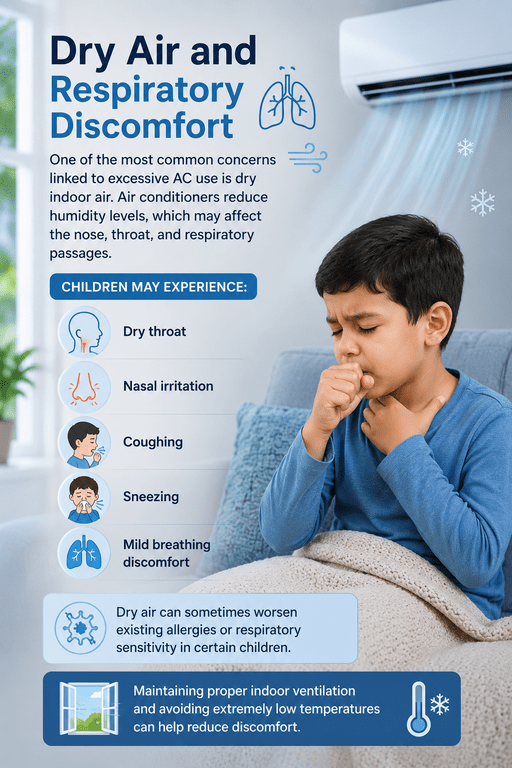
Dry Air and Respiratory Discomfort
One of the most common concerns linked to excessive AC use is dry indoor air. Air conditioners reduce humidity levels, which may affect the nose, throat, and respiratory passages.
Children may experience:
- Dry throat
- Nasal irritation
- Coughing
- Sneezing
- Mild breathing discomfort
Dry air can sometimes worsen existing allergies or respiratory sensitivity in certain children.
Maintaining proper indoor ventilation and avoiding extremely low temperatures can help reduce discomfort.
Skin Dryness and Irritation
Air conditioning can also reduce skin moisture. Children who spend long hours in cooled rooms may experience:
- Dry skin
- Itching
- Skin irritation
- Chapped lips
Low humidity removes moisture from the skin, especially if children are not drinking enough water throughout the day.
Hydration and regular skin care become important for maintaining healthy skin during summer.
Sudden Temperature Changes and Body Stress
Frequently moving between hot outdoor temperatures and cold indoor environments may place stress on the body.
Children may struggle to adjust quickly to sudden temperature shifts, which can sometimes lead to:
- Fatigue
- Headaches
- Mild body discomfort
- Reduced immunity
For example, entering a very cold room immediately after outdoor play in extreme heat may make children feel physically uncomfortable.
Balanced indoor cooling helps reduce stress caused by rapid temperature changes.
Reduced Physical Activity During Summer
Excessive air conditioner use may encourage children to remain indoors for long periods. While avoiding extreme heat is important, continuous indoor confinement may reduce physical movement.
Lack of activity can contribute to:
- Low energy levels
- Poor sleep patterns
- Increased screen time
- Reduced physical fitness
Children need regular movement, play, and physical activity for healthy growth and emotional balance.
Parents should encourage safe indoor exercises or outdoor play during cooler parts of the day.
Maintaining physical movement is an important part of children summer wellness.
Sleep Disturbances Caused by Excessive Cooling
Air conditioning may improve comfort during hot nights, but excessively cold room temperatures can disturb sleep quality.
Children may experience:
- Interrupted sleep
- Nasal dryness
- Discomfort during the night
- Restlessness
Very low AC temperatures may sometimes make children uncomfortable without them realizing the cause.
Maintaining moderate room temperatures usually supports healthier and more comfortable sleep.
Poor Indoor Air Quality
Air conditioners require proper cleaning and maintenance. Dirty filters may collect dust, allergens, and bacteria over time.
Poorly maintained AC systems may increase exposure to:
- Dust particles
- Allergens
- Airborne irritants
This may affect children who already have allergies or respiratory sensitivity.
Cleaning filters regularly and keeping rooms well ventilated can greatly improve indoor air quality.
The Importance of Hydration in Air-Conditioned Rooms
Children may not feel thirsty frequently while staying in cool environments, but the body still loses moisture throughout the day.
Air-conditioned environments may contribute to:
- Mild dehydration
- Dry mouth
- Reduced water intake
Parents should encourage children to drink water regularly even when they remain indoors.
Proper hydration supports:
- Skin health
- Energy levels
- Respiratory comfort
- Overall wellness
Hydration is one of the simplest and most effective summer indoor health tips for kids.
How Excessive AC Use May Affect Immunity
Many parents worry that constant air conditioning may weaken children’s immunity. While AC itself does not directly reduce immunity, poor indoor habits associated with excessive cooling may affect overall health.
Factors such as:
- Lack of ventilation
- Reduced sunlight exposure
- Physical inactivity
- Poor hydration
- Inadequate sleep
can negatively influence children’s well-being over time.
Balanced daily routines help support healthier immunity and better physical comfort.
Maintaining Safe AC Temperatures for Children
Parents should avoid keeping room temperatures excessively cold.
Helpful practices include:
- Maintaining moderate cooling
- Avoiding direct cold airflow on children
- Using comfortable clothing indoors
- Allowing natural airflow when possible
Sudden extreme cooling is usually less comfortable for children than stable moderate temperatures.
Balanced cooling improves comfort without placing unnecessary stress on the body.
Signs That Air Conditioning May Be Affecting Children
Parents should observe children for symptoms such as:
- Frequent sneezing
- Dry cough
- Dry skin
- Irritability
- Poor sleep
- Headaches
- Low energy
These signs may indicate that indoor cooling conditions need adjustment.
Simple changes in temperature, hydration, or ventilation often improve comfort quickly.
Balancing Indoor Comfort and Outdoor Exposure
Children benefit from balanced exposure to both comfortable indoor environments and safe outdoor activity.
Parents can create healthier routines by:
- Limiting continuous AC exposure
- Encouraging morning outdoor play
- Maintaining hydration
- Allowing fresh air circulation indoors
- Reducing excessive screen time
Balanced routines support emotional wellness, physical health, and healthy development during summer.
Healthy Summer Habits for Children
Several simple habits help children stay healthier while using air conditioning during summer.
Encourage Water Intake
Children should drink fluids regularly throughout the day.
Maintain Moderate Room Temperatures
Avoid extremely cold indoor environments.
Keep Indoor Air Clean
Regular cleaning and ventilation improve air quality.
Promote Physical Activity
Children should remain physically active daily.
Use Comfortable Clothing
Light cotton clothes improve comfort indoors.
Support Healthy Sleep
Balanced room temperatures help improve sleep quality.
These habits support healthier indoor environments during hot weather.

Conclusion
Understanding AC effects on children is important because excessive or improper air conditioner use may affect respiratory comfort, skin health, sleep quality, hydration, and physical activity levels during summer. While air conditioning provides relief from extreme heat, continuous exposure to very cold indoor environments may create discomfort for children if healthy routines are not maintained.
Parents can protect children by maintaining moderate room temperatures, encouraging hydration, improving indoor air quality, and balancing indoor comfort with physical activity and fresh air exposure. Proper AC use combined with healthy daily habits helps children remain comfortable and active throughout the summer season.
Air conditioning should support comfort, not replace healthy summer routines. Balanced care and early attention to discomfort can help children stay healthier, happier, and more energetic during hot weather.