
Summer sunshine may feel pleasant and refreshing, but excessive exposure to direct sunlight can create serious health concerns for older adults. As people age, the body becomes more sensitive to heat, dehydration, and ultraviolet radiation. Many seniors enjoy spending time outdoors for walking, relaxation, gardening, or social activities, yet prolonged sun exposure may negatively affect their physical health and overall well-being. Understanding the sun exposure risks for seniors is important because older adults often face greater difficulty handling extreme temperatures and heat-related stress.
The aging process naturally changes how the skin, heart, and immune system respond to sunlight and hot weather. Seniors may become dehydrated faster, recover more slowly from heat exhaustion, and experience increased sensitivity to skin damage. Long hours under the sun may also worsen existing medical conditions such as high blood pressure, diabetes, and heart-related concerns.
By learning how excessive sun exposure affects elderly individuals, families can take preventive steps to help seniors stay safer, healthier, and more comfortable during summer months.
Why Older Adults Are More Sensitive to Sun Exposure
Aging affects the body’s ability to regulate temperature efficiently. Seniors often sweat less, feel less thirsty, and adjust more slowly to changing environmental conditions.
Several factors increase heat sensitivity among older adults, including:
- Reduced fluid reserves
- Thinner and more sensitive skin
- Slower circulation
- Chronic health conditions
- Medication side effects
- Reduced immunity
These changes increase the likelihood of dehydration, heat stress, fatigue, and skin damage during prolonged outdoor exposure.
This is why awareness about sun exposure risks for seniors becomes especially important during summer.
Dehydration Risks in Hot Weather
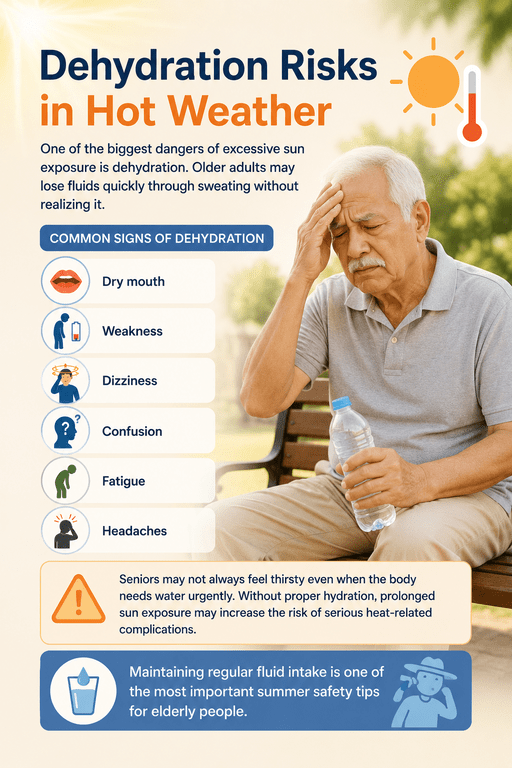
One of the biggest dangers of excessive sun exposure is dehydration. Older adults may lose fluids quickly through sweating without realizing it.
Common signs of dehydration include:
- Dry mouth
- Weakness
- Dizziness
- Confusion
- Fatigue
- Headaches
Seniors may not always feel thirsty even when the body needs water urgently. Without proper hydration, prolonged sun exposure may increase the risk of serious heat-related complications.
Maintaining regular fluid intake is one of the most important summer safety tips for elderly people.
Heat Exhaustion and Heat Stroke
Extended time under direct sunlight can increase the risk of heat exhaustion and heat stroke among seniors.
Heat Exhaustion Symptoms
- Excessive sweating
- Weakness
- Nausea
- Dizziness
- Muscle cramps
Heat Stroke Symptoms
- High body temperature
- Confusion
- Rapid heartbeat
- Loss of consciousness
Heat stroke is a serious medical emergency that requires immediate attention.
Older adults are often more vulnerable because the body’s cooling mechanisms become less effective with age.
Sun Exposure and Skin Damage
Aging skin becomes thinner and more sensitive over time. Too much sunlight may increase the risk of:
- Sunburn
- Skin irritation
- Dryness
- Dark spots
- Premature aging
Ultraviolet rays may also damage the skin barrier more quickly in elderly individuals compared to younger adults.
Seniors who spend long hours outdoors without proper protection often experience increased discomfort during summer.
Protecting the skin is an important part of maintaining healthy elderly skin care during summer.
Why Certain Medications Increase Heat Sensitivity
Many seniors take medications for chronic health conditions. Some medicines may increase sensitivity to sunlight or affect the body’s ability to regulate heat.
Certain medications may:
- Increase dehydration risk
- Reduce sweating
- Cause dizziness during heat exposure
- Increase skin sensitivity
Because of these effects, seniors should avoid spending long periods under direct sunlight, especially during peak afternoon hours.
Monitoring physical comfort and hydration becomes even more important for elderly individuals taking regular medications.
Cardiovascular Stress During Hot Weather
Excessive sun exposure may place additional strain on the heart and blood vessels.
During hot weather, the body works harder to cool itself through sweating and increased circulation. This extra effort may affect seniors who already have cardiovascular conditions.
Possible symptoms include:
- Fatigue
- Breathlessness
- Rapid heartbeat
- Weakness
Older adults with high blood pressure or heart-related concerns should be especially cautious during extreme heat.
Balanced summer routines help reduce unnecessary stress on the cardiovascular system.
The Impact of Sun Exposure on Energy Levels
Long periods in the sun may drain physical energy more quickly in seniors.
Many elderly individuals experience:
- Tiredness
- Reduced stamina
- Low motivation
- Physical discomfort
Heat-related fatigue may also affect mood, appetite, and sleep quality.
Proper rest, hydration, and limiting direct sun exposure help maintain healthier energy levels during summer.
Why Eye Protection Matters for Seniors
Excessive sunlight can also affect eye health in older adults. Strong UV rays may increase discomfort and strain on sensitive eyes.
Seniors may experience:
- Eye irritation
- Watering
- Blurred vision
- Sensitivity to bright light
Wearing protective sunglasses and avoiding harsh sunlight can improve visual comfort during outdoor activities.
Eye protection is often overlooked but remains an important part of summer safety for elderly individuals.
Safe Outdoor Habits for Seniors
Older adults do not need to avoid outdoor activities completely during summer. However, safer timing and healthy habits are important.
Helpful outdoor safety measures include:
- Going outdoors during early morning or evening hours
- Avoiding peak afternoon heat
- Wearing lightweight cotton clothing
- Using hats or umbrellas
- Drinking water regularly
- Taking rest breaks in shaded areas
These precautions help reduce the harmful effects of prolonged sun exposure.
Importance of Hydration Throughout the Day
Staying hydrated is important for seniors even when they stay indoors. Air conditioning and summer heat may still increase fluid loss.
Healthy hydration habits include:
- Drinking water regularly
- Consuming water-rich fruits
- Avoiding excessive caffeine
- Including healthy fluids in meals
Proper hydration supports circulation, energy levels, and temperature regulation.
Maintaining hydration is one of the simplest ways to reduce heat-related health problems in seniors.
The Role of Families and Caregivers
Family members play a major role in protecting seniors during hot weather.
Caregivers should monitor:
- Water intake
- Outdoor activity duration
- Signs of fatigue
- Skin changes
- Heat-related discomfort
Many seniors may hesitate to discuss symptoms or may underestimate the effects of extreme heat.
Simple daily observation and supportive care can help prevent serious complications.
Healthy Summer Routines for Older Adults
Balanced daily routines support healthier aging during summer months.
Helpful habits include:
- Maintaining regular meal schedules
- Staying physically active indoors
- Sleeping properly
- Wearing breathable clothing
- Keeping indoor spaces cool and ventilated
Healthy summer routines improve both physical and emotional comfort for elderly individuals.
Consistency helps the body adapt better to seasonal weather changes.
Warning Signs That Should Never Be Ignored
Families should seek attention if seniors experience:
- Severe dizziness
- Confusion
- Extreme weakness
- Chest discomfort
- Difficulty breathing
- Very high body temperature
Early action can prevent heat-related conditions from becoming more serious.
Ignoring symptoms may increase health risks significantly during summer.

Conclusion
Understanding sun exposure risks for seniors is essential because older adults are more vulnerable to dehydration, heat exhaustion, skin damage, cardiovascular stress, and fatigue during hot weather. Aging naturally reduces the body’s ability to regulate temperature efficiently, making excessive sun exposure more dangerous for elderly individuals.
Simple preventive steps such as staying hydrated, avoiding peak afternoon heat, wearing protective clothing, and maintaining balanced daily routines can significantly improve safety and comfort during summer. Families and caregivers also play an important role in monitoring seniors and recognizing early warning signs of heat-related problems.
Summer health protection should never be ignored for older adults. With proper care, healthy habits, and limited sun exposure, seniors can remain active, comfortable, and healthier throughout the hottest months of the year.