
Summer often changes eating habits for many people. During extremely hot weather, appetite naturally decreases, and some individuals begin skipping meals because they feel less hungry or too tired to eat. While occasional light eating may seem harmless, regularly avoiding meals during summer can negatively affect physical energy, hydration, digestion, and overall health. Understanding the effects of skipping meals in summer is important because hot weather already places extra stress on the body.
Many people assume that eating less during summer helps the body feel lighter and more comfortable. However, consistently missing meals may weaken the body’s ability to maintain proper energy levels and temperature balance. Children, working adults, elderly individuals, and people with medical conditions are especially vulnerable to the effects of poor nutrition during hot weather.
Healthy eating habits during summer are essential for maintaining hydration, stamina, and overall wellness. Ignoring proper nutrition may increase fatigue, weakness, headaches, dizziness, and several other seasonal health concerns.
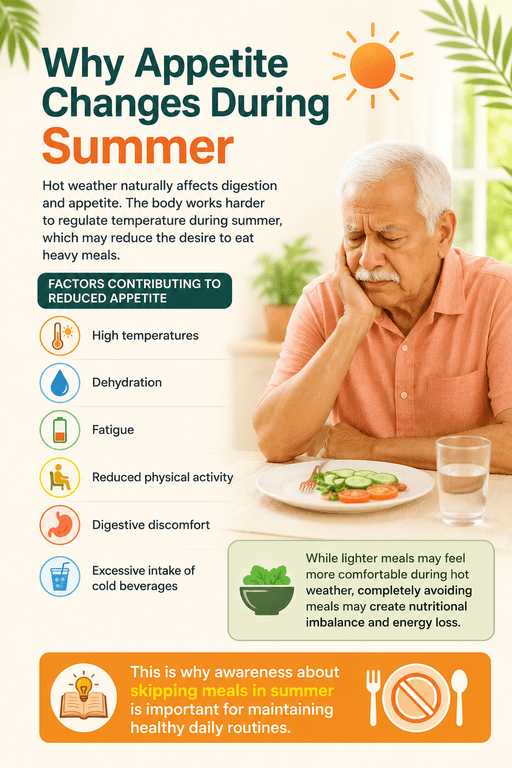
Why Appetite Changes During Summer
Hot weather naturally affects digestion and appetite. The body works harder to regulate temperature during summer, which may reduce the desire to eat heavy meals.
Several factors contribute to reduced appetite during summer, including:
- High temperatures
- Dehydration
- Fatigue
- Reduced physical activity
- Digestive discomfort
- Excessive intake of cold beverages
While lighter meals may feel more comfortable during hot weather, completely avoiding meals may create nutritional imbalance and energy loss.
This is why awareness about skipping meals in summer is important for maintaining healthy daily routines.
How Skipping Meals Affects Energy Levels
Food provides the body with essential nutrients and energy needed for daily activities. During summer, the body already loses energy through sweating and heat exposure.
When meals are skipped regularly, the body may experience:
- Weakness
- Fatigue
- Low stamina
- Reduced concentration
- Irritability
Many people blame hot weather alone for their tiredness, but inadequate nutrition may also contribute significantly.
Balanced eating supports both physical and mental energy during summer months.
The Connection Between Meal Skipping and Dehydration
Many people do not realize that food also contributes to hydration. Fruits, vegetables, curd, soups, and healthy meals provide fluids and electrolytes that support the body during hot weather.
When meals are skipped, the risk of dehydration may increase because the body receives fewer nutrients and less moisture.
This may lead to:
- Dry mouth
- Dizziness
- Headaches
- Muscle weakness
- Confusion
Proper hydration combined with regular meals helps maintain healthy circulation and temperature regulation.
Maintaining balanced nutrition is one of the most important summer nutrition tips.
Blood Sugar Fluctuations During Summer
Skipping meals can cause blood sugar to drop suddenly, especially in hot weather when the body is already stressed.
Low blood sugar may result in:
- Dizziness
- Sweating
- Trembling
- Mood swings
- Fatigue
- Difficulty concentrating
Children, elderly individuals, and people with diabetes may face greater risks if meals are skipped regularly.
Consistent eating patterns help stabilize blood sugar and maintain better physical comfort during summer.
Digestive Problems Linked to Skipping Meals
Many people believe that eating less automatically improves digestion during summer. However, irregular eating habits may sometimes worsen digestive discomfort.
Skipping meals may contribute to:
- Acidity
- Bloating
- Stomach discomfort
- Indigestion
- Nausea
Long gaps between meals may increase stomach acid production, leading to irritation and digestive imbalance.
Light and nutritious meals are usually more beneficial than completely avoiding food during hot weather.
Why Working Adults Commonly Skip Meals in Summer
Busy schedules combined with hot weather often reduce appetite among working adults.
Many office workers or outdoor workers skip meals because of:
- Fatigue
- Heat exposure
- Lack of time
- Reduced hunger
- Excessive caffeine intake
However, skipping meals may worsen summer exhaustion and reduce work productivity.
Adults who avoid proper meals during summer may experience lower concentration, irritability, and physical weakness throughout the day.
The Impact on Children During Summer
Children are highly active during summer vacations and outdoor play. Skipping meals may affect their physical growth, hydration, and energy levels.
Children who avoid meals may show:
- Weakness
- Mood swings
- Reduced appetite further
- Fatigue
- Irritability
Parents should encourage light but nutritious meals instead of allowing children to depend only on cold drinks or snacks during summer.
Balanced nutrition supports healthy summer eating habits for better health.
Why Seniors Should Not Skip Meals During Summer
Older adults are especially vulnerable to dehydration and weakness during hot weather.
Seniors who skip meals may face:
- Low energy
- Dizziness
- Increased dehydration risk
- Blood pressure fluctuations
- Reduced immunity
Aging bodies already struggle more with heat regulation, making proper nutrition extremely important during summer.
Small frequent meals are often more suitable for elderly individuals during hot weather.
The Role of Electrolytes and Nutrition
Sweating during summer leads to loss of important minerals such as sodium and potassium. Balanced meals help replenish these nutrients naturally.
Healthy summer foods include:
- Watermelon
- Cucumber
- Yogurt and curd
- Coconut water
- Fresh fruits
- Light home-cooked meals
These foods support hydration, digestion, and energy while keeping the body cooler.
Replacing meals with only sugary drinks or packaged snacks may increase fatigue and dehydration.
Mental Effects of Poor Nutrition During Summer
Skipping meals does not only affect physical health. Poor nutrition may also influence emotional well-being and concentration.
People who avoid regular meals may experience:
- Irritability
- Mood swings
- Low motivation
- Difficulty focusing
- Increased stress
Heat exposure combined with inadequate nutrition may make emotional discomfort more noticeable.
Healthy eating supports both mental and physical wellness during summer.
Healthy Summer Eating Habits
Maintaining proper nutrition during summer does not mean eating heavy meals. Instead, balanced and lighter eating habits are more effective.
Helpful summer eating practices include:
- Eating smaller frequent meals
- Including water-rich fruits
- Drinking enough fluids
- Avoiding excessive oily foods
- Choosing fresh homemade meals
Balanced meals help the body stay energized without causing digestive discomfort.
Healthy routines improve overall comfort during hot weather.
Importance of Breakfast During Summer
Breakfast is often the most skipped meal during summer, especially among busy adults and students.
Missing breakfast may lead to:
- Low morning energy
- Reduced concentration
- Weakness during outdoor activity
A nutritious breakfast supports better energy levels and prepares the body to handle summer heat more effectively.
Even simple meals like fruits, curd, oats, or light traditional breakfasts can support healthier summer mornings.
Warning Signs That Should Not Be Ignored
People should pay attention to symptoms such as:
- Frequent dizziness
- Persistent fatigue
- Lack of focus
- Excessive weakness
- Headaches
- Reduced appetite for long periods
These signs may indicate nutritional imbalance or dehydration linked to poor eating habits.
Ignoring symptoms may increase the risk of more serious summer health complications.
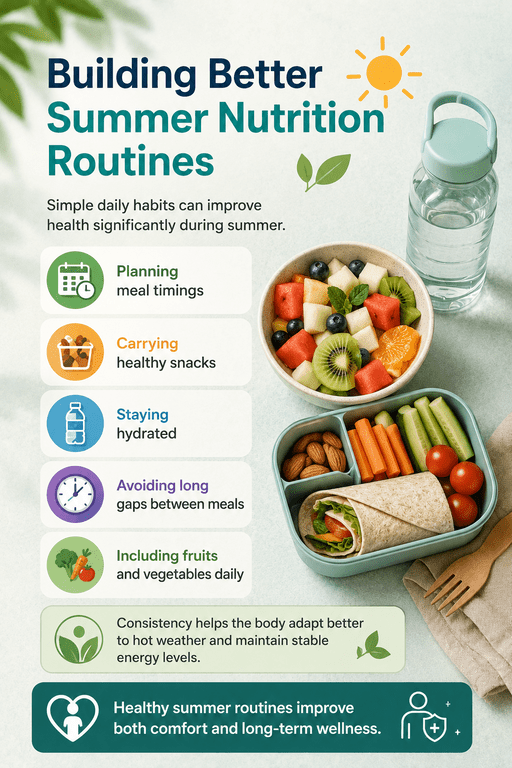
Building Better Summer Nutrition Routines
Simple daily habits can improve health significantly during summer.
Helpful practices include:
- Planning meal timings
- Carrying healthy snacks
- Staying hydrated
- Avoiding long gaps between meals
- Including fruits and vegetables daily
Consistency helps the body adapt better to hot weather and maintain stable energy levels.
Healthy summer routines improve both comfort and long-term wellness.
Conclusion
Understanding the hidden dangers of skipping meals in summer is important because hot weather already places additional stress on the body. Avoiding meals may increase dehydration, fatigue, blood sugar imbalance, digestive discomfort, and weakness during summer months.
Children, working adults, and seniors are especially vulnerable to the effects of poor nutrition during extreme heat. Balanced meals, proper hydration, water-rich foods, and consistent eating routines help maintain energy, support digestion, and improve overall well-being.
Summer nutrition should never be ignored simply because appetite decreases during hot weather. Light, healthy, and regular meals are essential for helping the body stay stronger, healthier, and more comfortable throughout the summer season.