
When a medical situation arises, knowing where to go for treatment can make a big difference. Many people often get confused between emergency care and urgent care. Understanding the difference between these two can help you make faster and better decisions during critical moments. This is where the concept of emergency vs urgent care becomes important.
Both services are designed to provide medical help, but they are meant for different types of situations. In this blog, we will clearly explain the difference between emergency vs urgent care, when to choose each option, and how it impacts patient care.
What is Emergency Care?
Emergency care is designed for life-threatening conditions that require immediate medical attention. These situations can be severe and need quick intervention to save a person’s life or prevent serious complications.
Examples of emergency conditions include:
- Heart attack
- Stroke
- Severe bleeding
- Difficulty breathing
- Major accidents or injuries
In emergency vs urgent care, emergency care is always the first choice when the condition is critical and cannot wait.
What is Urgent Care?
Urgent care is meant for non-life-threatening conditions that still require prompt medical attention. These issues are not emergencies but should be treated quickly to avoid worsening.
Examples of urgent care conditions include:
- Minor fractures
- Fever or infections
- Mild asthma attacks
- Cuts that may need stitches
- Minor burns
When comparing emergency vs urgent care, urgent care is suitable for situations that are serious but not life-threatening.
Key Differences Between Emergency and Urgent Care
Understanding the main differences helps you decide where to go during a medical situation.
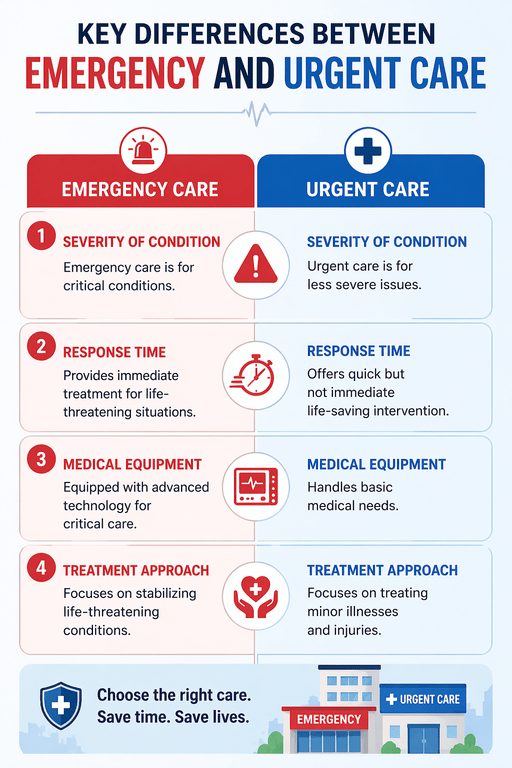
1. Severity of Condition
In emergency vs urgent care, emergency care is for critical conditions, while urgent care is for less severe issues.
2. Response Time
Emergency care provides immediate treatment for life-threatening situations.
Urgent care offers quick but not immediate life-saving intervention.
3. Medical Equipment
Emergency care units are equipped with advanced technology for critical care.
Urgent care centers handle basic medical needs.
4. Treatment Approach
Emergency care focuses on stabilizing life-threatening conditions.
Urgent care focuses on treating minor illnesses and injuries.
When Should You Choose Emergency Care?
Knowing when to choose emergency care is crucial.
Choose emergency care if you experience:
- Chest pain
- Sudden weakness or paralysis
- Severe head injury
- Uncontrolled bleeding
- Loss of consciousness
In the comparison of emergency vs urgent care, these situations clearly require emergency care.
When Should You Choose Urgent Care?
Urgent care is suitable for conditions that need attention but are not life-threatening.
Choose urgent care for:
- Mild infections
- Minor injuries
- Moderate pain
- Allergic reactions without breathing issues
Understanding emergency vs urgent care helps you avoid unnecessary delays.
Why Knowing the Difference Matters
Making the wrong choice between emergency and urgent care can lead to delays in treatment or unnecessary stress.
Knowing emergency vs urgent care helps:
- Save time
- Get the right treatment
- Avoid overcrowding in emergency rooms
- Improve patient outcomes
Role of Healthcare Professionals
Healthcare professionals play a crucial role in managing patient care based on the severity of the condition. They are specially trained to quickly assess symptoms, identify risks, and decide the right course of action. In situations involving emergency vs urgent care, their ability to make fast and accurate decisions becomes extremely important.
During the emergency vs urgent care process, medical teams follow structured protocols to ensure that each patient receives the appropriate level of care. In emergency cases, professionals act immediately to stabilize life-threatening conditions. In urgent care situations, they focus on providing timely treatment to prevent complications.
Understanding emergency vs urgent care, healthcare professionals ensure that patients are directed to the right facility and receive the correct treatment without delay. Their expertise, coordination, and quick response play a vital role in improving patient outcomes and ensuring effective healthcare delivery.
Common Mistakes People Make
Many people make mistakes when choosing between emergency and urgent care.
Common mistakes include:
- Going to urgent care for serious conditions
- Visiting emergency care for minor issues
- Delaying treatment due to confusion
Understanding emergency vs urgent care can help avoid these errors.
Impact on Patient Outcomes
Choosing the right type of care directly affects recovery and treatment success.
In emergency vs urgent care, timely and appropriate care leads to:
- Faster recovery
- Reduced complications
- Better patient experience
Importance of Awareness
Public awareness about emergency vs urgent care is extremely important in today’s fast-paced world. Many people face confusion when deciding where to go during a medical situation, and this confusion can lead to delays in treatment. When individuals clearly understand emergency vs urgent care, they can make quick and informed decisions that can protect their health and even save lives.
Awareness helps people recognize the severity of a condition. For example, knowing the difference between life-threatening symptoms and minor health issues allows individuals to choose the right type of care. Understanding emergency vs urgent care also reduces unnecessary visits to emergency services for non-critical issues, ensuring that resources are available for patients who truly need them.
In addition, awareness improves confidence during stressful situations. When people are educated about emergency vs urgent care, they are less likely to panic and more likely to act responsibly. This leads to better patient outcomes and smoother healthcare experiences.
How to Stay Prepared
Being prepared can help you handle medical situations effectively.
Tips include:
- Know the signs of emergencies
- Understand common urgent care conditions
- Keep emergency contact numbers ready
These steps make it easier to decide between emergency vs urgent care.
The Role of Time in Medical Care
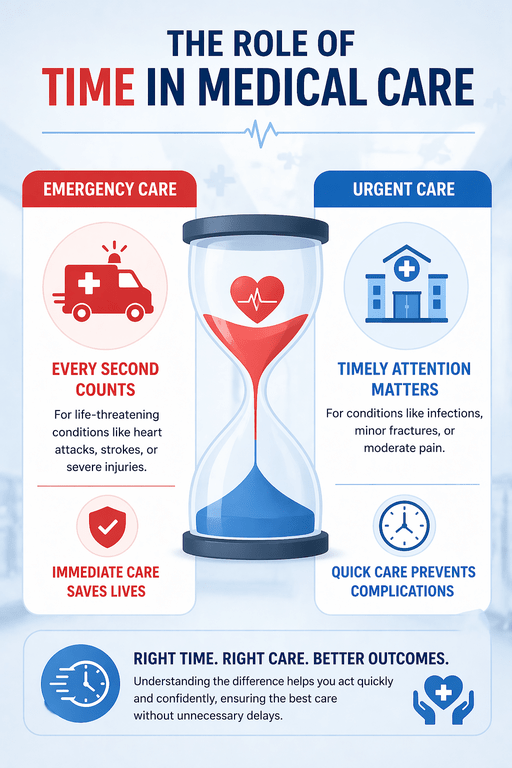
Time plays a crucial role in healthcare, especially when it comes to choosing between emergency vs urgent care. In emergency situations, every second counts. Conditions such as heart attacks, strokes, or severe injuries require immediate attention, and even a small delay can lead to serious complications. This is why understanding emergency vs urgent care is so important it helps ensure that critical cases receive immediate care.
On the other hand, urgent care situations also require timely attention, although they are not life-threatening. Conditions like infections, minor fractures, or moderate pain can worsen if not treated quickly. Knowing the difference between emergency vs urgent care allows patients to seek treatment at the right time and avoid complications.
Proper timing not only improves recovery but also reduces stress and uncertainty. When people understand emergency vs urgent care, they can act quickly and confidently, ensuring that medical care is received without unnecessary delays.
Final Thoughts
Understanding the difference between emergency and urgent care is essential for making the right healthcare decisions. The concept of emergency vs urgent care helps you clearly identify whether a situation is life-threatening or requires quick but non-emergency attention. When people understand emergency vs urgent care, they are better prepared to act quickly and choose the right type of medical help.
Emergency care is meant for critical conditions that require immediate action, such as severe injuries, breathing problems, or chest pain. On the other hand, urgent care is suitable for less severe issues like minor infections, mild injuries, or moderate pain. Knowing the difference between emergency vs urgent care ensures that patients receive the right treatment without unnecessary delays.
Being aware of emergency vs urgent care also helps reduce stress during medical situations. When you know where to go, you can avoid confusion and make faster decisions. This not only improves patient outcomes but also helps healthcare systems function more efficiently.In the end, understanding emergency vs urgent care ensures that you and your loved ones receive the right care at the right time. Making informed decisions during medical situations can significantly improve recovery, reduce complications, and support overall health and well-being.